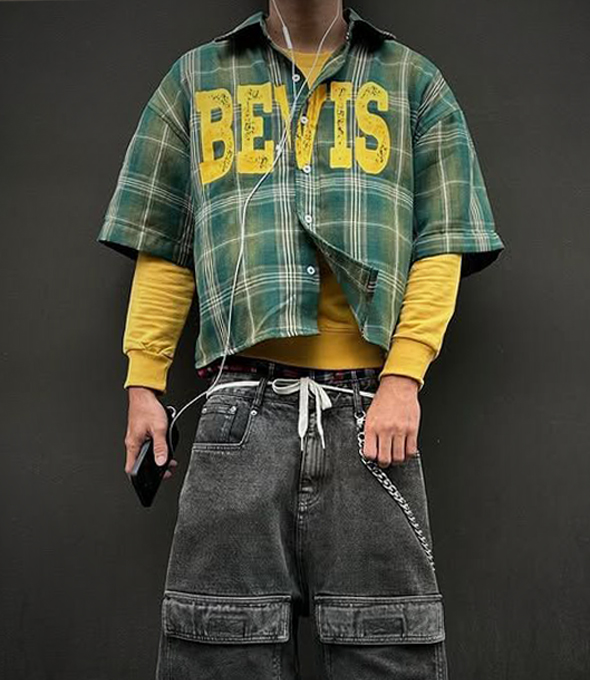
Material Specification for Premium Varsity Jacket Production: What Streetwear Brands Need to Control
A varsity jacket looks like a straightforward classic on the rack. It has a wool body, leather sleeves, some ribbing, and a few patches. But for independent brands with real traction, the reality of developing this category is entirely different. The varsity jacket is not hard because of the design concept; it is hard because the execution requires aligning multiple complex materials that shrink, drape, and age differently. Most production problems with premium outerwear start before sewing even begins.
For established streetwear brands, releasing a varsity jacket is often a high-stakes move. The retail price is high, the consumer expectations are strict, and the margin for error in bulk production is nearly zero. A sample might look perfect in the showroom, but when that same tech pack goes into a 500-piece bulk run, the differences in fabric hand-feel, leather stiffness, and trim substitution can ruin the entire drop. This is why material specification control is the most critical phase in custom streetwear development.
What makes varsity jacket material sourcing more complex than basic outerwear?
The complexity of a premium varsity jacket lies in material compatibility. Procurement teams must source wool blends, genuine or vegan leather, custom-dyed ribbing, and heavy-duty hardware that must all interact perfectly. If one material behaves differently during bulk cutting or finishing, the entire silhouette collapses.
When product development teams move from basic hoodies to varsity jackets, they often underestimate the friction between materials. A heavyweight hoodie uses one primary fabric. A varsity jacket forces heavy wool and rigid leather to share a seam. If the wool has too much stretch and the leather is too stiff, the armhole will pucker. If the lining fabric shrinks during a finishing process but the outer shell does not, the jacket will warp and lose its structured fit.
This is where a specialized streetwear factory separates itself from a general apparel manufacturer. A general factory will source whatever wool and leather are easily available in the market to hit a target price. An OEM streetwear manufacturer focused on high-quality custom streetwear production will test the shrinkage and drape of both materials together before approving the pre-production sample. They know that sample-to-bulk alignment is impossible if the raw materials are not engineered to work as a unified garment.
The technical gap becomes obvious during the tech pack review. A standard factory will look at a tech pack for a varsity jacket and only check the basic measurements. A specialized will immediately flag potential material conflicts. For instance, if the design calls for a heavy 800gsm melton wool body but specifies a lightweight satin lining, the manufacturer will warn the brand that the lining might tear under the weight of the wool during daily wear. This level of foresight is what prevents disastrous bulk production outcomes.
Furthermore, the cutting process for mixed materials requires entirely different setups. Wool can be cut in thick stacks using automated machinery, but premium leather must often be cut by hand or in very small batches to avoid stretching or distorting the grain. When brands try to force a varsity jacket through a factory built for basic cotton t-shirts, the lack of specialized cutting and handling equipment immediately degrades the final product.
Why does wool weight and composition dictate the entire jacket structure?
Wool weight determines the drape and structure of the jacket body. If the GSM (grams per square meter) is too low, the jacket feels cheap and flimsy. If the synthetic blend ratio is too high, the fabric will pill quickly and fail to support heavy embroidery or chenille patches.
For streetwear brands with proven sales, the tactile experience of a varsity jacket is non-negotiable. Consumers might not know the exact wool composition, but they immediately recognize when a jacket lacks the proper density. Premium streetwear production usually requires a heavy melton wool, often blending 50% to 80% wool with synthetic fibers for durability and shape retention.
The risk in bulk production happens when factories quietly substitute a high-density wool blend for a lighter, cheaper alternative. A 600gsm wool behaves very differently from an 800gsm wool. When the weight drops, the jacket loses its boxy, structured silhouette. More importantly, lighter wool cannot hold the tension of large-scale embroidery. If a brand plans to apply a massive chenille patch across the back, a lightweight body fabric will warp and sag under the weight of the thread. Procurement teams must strictly define the GSM, composition, and hand-feel in the tech pack, and verify these exact specs during the fabric sourcing phase.
Beyond just the weight, the finishing of the wool is crucial. Premium melton wool undergoes a fulling process, where the fabric is woven, then heavily felted and brushed to create a dense, wind-resistant surface with no visible weave. If a factory tries to cut costs by skipping the final brushing stage, the wool will feel scratchy and look unfinished. This is a common issue when brands transition from sampling to bulk without locking in the exact fabric finishing standards.
Additionally, the synthetic blend ratio must be carefully controlled. While 100% wool is luxurious, it is often too delicate and prone to extreme shrinkage for a daily-wear streetwear piece. Adding 20% to 30% polyester or nylon improves durability and helps the jacket hold its shape. However, if a supplier pushes the synthetic ratio above 50% to lower costs, the fabric will develop severe pilling (those small, unsightly balls of fuzz) after only a few weeks of wear. Procurement teams must request fabric composition testing reports before approving the bulk fabric order.
How does sleeve material selection affect the oversized fit?
The choice between genuine leather, premium vegan leather, and synthetic PU drastically changes how the sleeve falls. If the material is too rigid, an oversized drop-shoulder design will look stiff and unnatural. If it is too thin, the sleeve will lack the classic varsity volume.
Oversized and boxy fits are foundational to modern streetwear aesthetics. However, achieving an oversized fit in a varsity jacket requires real pattern development, not just scaling up standard sizes. The relationship between the armhole pattern and the sleeve material is critical.
If a brand specifies an exaggerated drop shoulder, the sleeve material must have the right balance of structure and pliability. Genuine cowhide offers excellent durability and a premium aging process, but it requires precise thickness control (usually around 1.0mm to 1.2mm) to ensure it can be sewn cleanly into a dropped armhole. If the leather is too thick, the seam becomes bulky, making the wearer look stiff. High-grade vegan leather has become a popular alternative for established streetwear brands because it offers more consistent thickness across bulk rolls, reducing batch-level variation.
When evaluating a , brands should ask how they handle leather skiving (thinning the edges of the leather before sewing). A manufacturer experienced in complex garment construction will ensure that the seams where the leather meets the wool are flat and clean, preventing the bulky, uncomfortable joints that plague lower-tier production.
The behavior of the sleeve material also impacts the wrist cuff. A thick, rigid leather will fight against the elastic ribbing at the cuff, creating a ballooning effect that looks awkward. To solve this, pattern makers at a premium streetwear manufacturer will often taper the leather sleeve slightly as it approaches the wrist, allowing it to gather naturally into the ribbing. This subtle pattern adjustment is the difference between a jacket that drapes perfectly and one that looks like a stiff costume.
Furthermore, the grain and finish of the leather must remain consistent across the entire production run. Genuine leather naturally varies from hide to hide. If the factory does not have strict sorting protocols, one sleeve might have a smooth, buttery finish while the other has a heavily pebbled texture. This visual mismatch is unacceptable for premium streetwear brands. Quality control teams must ensure the factory has a dedicated leather sorting and matching process before cutting begins.
What should procurement teams check regarding ribbing and hardware?
Ribbing must match the exact dye lot of the body fabric and maintain its elasticity over time. Hardware, such as snap buttons, must be heavy-duty enough to pierce thick wool and leather without popping off or damaging the surrounding fabric.
Trims are often treated as an afterthought in basic apparel, but in premium custom streetwear production, they are a primary failure point. The ribbing on the collar, cuffs, and hem of a varsity jacket takes the most physical stress. If the factory uses a low-density acrylic ribbing, it will stretch out and pill after a few wears, instantly degrading the perceived value of the jacket. Brands with validated market demand specify heavy-duty, high-retention ribbing—often a cotton-spandex or wool-blend knit—that holds its shape.
Color matching is another major hurdle. Dyeing wool, leather, and cotton ribbing to the exact same Pantone shade is chemically difficult because each material absorbs dye differently. A sample might look color-matched under factory lighting, but look completely mismatched in natural sunlight (metamerism). To prevent this, procurement teams must request lab dips (small dyed fabric swatches) for all three materials and review them under multiple lighting conditions (D65 daylight, store lighting, etc.) before approving the color.
Similarly, snap buttons must be engineered for thick layers. A standard snap will fail when forced through 800gsm wool and a quilted lining. Brands must specify heavy-duty brass or alloy snaps with elongated prongs designed specifically for outerwear. During the pre-production approval stage, the factory must conduct pull-testing to ensure the snaps can withstand repeated opening and closing without tearing the wool.
The backing of the snaps is equally important. If the snaps are installed directly into the wool without a stabilizing reinforcement layer hidden inside the placket, the repeated stress of pulling the jacket open will eventually rip the wool fibers. A specialized streetwear factory will always fuse a strip of heavy interfacing behind the snap line to distribute the tension, a detail that basic apparel factories frequently overlook.
Why do complex decoration techniques increase bulk production risk?
Techniques like large-scale embroidery, chenille patches, and appliqué require precise tension control. If the factory does not stabilize the backing properly, the heavy decoration will distort the wool shell, causing permanent puckering in bulk production.
A premium varsity jacket is essentially a canvas for brand identity. Independent brands with real traction rely on dense, multi-technique decorations to justify high retail price points. However, applying a 12-inch chenille patch or 50,000-stitch embroidery to a wool body introduces massive tension to the fabric.
In a sample room, a skilled technician can manually adjust the embroidery machine to ensure the patch sits perfectly flat. But in bulk production, when hundreds of jackets are running through automated embroidery heads, the risk of fabric distortion skyrockets. If the backing stabilizer is incorrect, or if the hoop tension is slightly off, the wool will pucker around the edges of the design.
Once wool is warped by tight embroidery thread, it cannot be ironed flat.
This is why sample-to-bulk alignment is the true test of a streetwear manufacturing partner. Experienced factories will conduct extensive embroidery testing on the exact bulk fabric before cutting the main panels. They understand that the decoration must be engineered to match the specific stretch and density of the wool.
Moreover, mixing techniques—such as combining flat embroidery with chenille and felt appliqué—creates uneven thickness across the design. The factory must sequence the application perfectly. If the thickest part of the patch is applied first, the embroidery foot might catch on it during the next pass, ruining the panel.
Placement consistency is another major risk during bulk production. A large back patch must be perfectly centered, not just horizontally, but vertically in relation to the collar and the hem. If the factory relies on manual placement without creating custom placement jigs or templates for each size (from Small to XXL), the graphic will look disproportionate on larger or smaller jackets. Procurement teams must insist on reviewing graded placement guides before bulk decoration begins.
How can brands ensure sample-to-bulk consistency for outerwear?
To prevent bulk variation, brands must lock in every material specification during tech pack review and demand a full pre-production (PP) sample using actual bulk materials, not substitute sample-yardage.
The most dangerous phrase in apparel manufacturing is "we will fix this in bulk." For high-ticket items like varsity jackets, whatever is wrong with the sample will be multiplied in production.
To maintain control, product development teams must build a rigid approval system. First, the tech pack must be exhaustively detailed, leaving no room for factory interpretation on fabric weight, leather thickness, or ribbing density. Second, the pre-production sample must be cut from the actual bulk fabric rolls, not leftover sample yardage. Wool and leather can vary significantly from batch to batch; if the PP sample is not made from the final bulk materials, it is useless as a reference point.
During the PP sample review, the brand must check the internal construction just as rigorously as the exterior. Is the quilted lining properly secured so it doesn't sag below the hem? Are the internal pockets reinforced with leather welts to prevent tearing? These hidden details are what separate a premium streetwear jacket from a fast-fashion imitation.
Finally, final inspection must go beyond measuring dimensions. Quality control teams must physically check the drape of the jacket, the tension of the snaps, and the flatness of the embroidery. They must ensure that the leather sleeves have been properly conditioned and that no needle marks or scuffs occurred during the final pressing phase. By partnering with a specialized that understands the culture and technical rigor of premium outerwear, brands can scale their collections without sacrificing the tactile quality that their audience expects.
In the end, scaling premium streetwear production is about building a system of control. The varsity jacket is the ultimate test of that system. It exposes every weakness in a brand's sourcing strategy and a factory's execution capability. Brands that master this category do not just find a supplier; they build a long-term relationship with a manufacturing partner capable of executing complex, multi-material garments with absolute consistency.
What Makes an Overseas Streetwear Manufacturer Ready for Long-Term Replenishment, Not Just a First Run?
Most sourcing problems do not appear when a factory says yes to a tech pack, nor do they surface when the first sample arrives in the mail. The real friction happens much later—when a successful drop turns into a frantic restock, and suddenly, the fabric feels different, the wash is inconsistent, and the delivery timeline collapses. For independent brands with real traction, the hardest part of streetwear manufacturing is not getting a product made once. It is getting it made exactly the same way, at scale, across multiple production cycles.
A successful first run is often treated as proof of capability, but in reality, it only proves that a factory can execute under controlled conditions. When established streetwear brands transition from testing a concept to long-term replenishment, the operational requirements shift entirely. The focus moves away from simple capability and toward supply chain density, bulk production control, and the ability to manage complex variables simultaneously. Whether a brand is working with a local cut-and-sew streetwear factory or an overseas streetwear manufacturer, evaluating a partner for long-term viability requires looking past the sample room and directly into the bulk production system.
Why does a successful first run tell you almost nothing about replenishment readiness?
A successful first run only proves that a manufacturer can execute a small, highly monitored batch. Replenishment readiness requires systemic control over supply chain variables, meaning the factory must manage fabric sourcing, wash coordination, and bulk cutting without relying on manual oversight for every single piece.
When a product team develops a new silhouette, the initial production run is usually treated as a priority project. The factory’s sample room pays close attention to the tech pack review, the pattern development is handled by senior staff, and the fabric sourcing is done specifically for that limited batch. Because the volume is relatively low, any minor issues with print placement or sewing tolerance can be corrected on the floor before the garments are packed. This creates a false sense of security for the brand.
However, when that same product sells out and requires a fast restock, the dynamic changes. The production moves from the sample room to the main sewing lines. The fabric must be re-ordered, often from a different dye lot. The wash house is now processing thousands of units instead of fifty, meaning the enzyme or acid wash times must be perfectly calibrated to avoid batch-level variation. If the streetwear manufacturing partner does not have strict pre-production approval processes in place for bulk runs, the replenishment order will inevitably look and feel different from the original drop.
For brands with validated market demand, this inconsistency is a major operational risk. Consumers who buy a restocked item expect the exact same premium execution they saw in the initial release. When a factory lacks the infrastructure for long-term replenishment, the brand ends up dealing with sample-to-bulk mismatch, unstable wash control, and fabric hand-feel differences. The ability to produce a great sample is a design skill; the ability to replicate it six months later is a supply chain discipline.
What does real bulk-to-bulk consistency actually require from a streetwear manufacturer?
Real bulk-to-bulk consistency requires a streetwear manufacturer to control the entire production timeline, from sourcing the exact same fabric rolls and trim substitutions to managing wash times, print placement, and sewing tolerances across different production cycles without deviation.
When a streetwear label needs a long-term production partner, the evaluation must move beyond whether a factory can produce a specific technique, such as a heavyweight fleece or an oversized fit. The real question is whether they can produce that exact same heavyweight fleece and oversized fit on a Tuesday in March and again on a Thursday in October. This requires a level of supply chain depth that many standard apparel manufacturers lack.
For a cut-and-sew streetwear factory to achieve this consistency, they must have established relationships with fabric mills that can guarantee the same yarn weight, knitting tension, and dyeing process for every order. If a factory simply buys stock fabric from a local market, the brand is immediately exposed to fabric hand-feel differences and unpredictable shrinkage. Every time a restock is ordered, the factory might be forced to substitute the material because the original roll is no longer available. This leads to immediate consumer complaints about the product feeling thinner or stiffer than the first release.
Beyond the raw material, consistency in streetwear manufacturing relies heavily on the coordination between different specialized facilities. A premium hoodie might require custom dyeing, screen printing, embroidery, and a specific wash treatment. If the streetwear apparel manufacturer does not tightly control the timeline and the quality standards at each step, the risk of error multiplies. A slight change in the enzyme wash time can alter the color of the garment and affect the vibrancy of the print. A minor adjustment in the sewing tension can cause silhouette imbalance, making the restocked item drape differently on the body. Real bulk-to-bulk consistency is built on strict pre-production approval and rigorous inspection protocols, ensuring that the second, third, and fourth runs match the approved master sample exactly.
How does supply chain depth affect a manufacturer's ability to hold quality across multiple production runs?
Supply chain depth allows a manufacturer to manage complex, multi-technique production without relying on unstable third-party vendors. A deep supply chain ensures that fabric sourcing, wash coordination, print execution, and bulk cutting are tightly integrated, reducing the risk of delays and quality breakdown.
Streetwear production is inherently more complex than basic apparel manufacturing because it often involves layering multiple techniques onto a single garment. A brand with proven sales might design a collection that features custom heavyweight cotton, complex paneling, distressed hems, puff printing, and custom hardware. When an overseas streetwear manufacturer attempts to produce this at scale, the depth of their local supply chain becomes the defining factor in their success or failure.
If a factory operates in an isolated region without a dense ecosystem of specialized suppliers, they will struggle to execute complex designs consistently. They might have excellent sewing capabilities, but if they have to send the garments far away for specialized washing or printing, they lose control over the timeline and the quality. In contrast, manufacturing hubs with high supply chain density allow for rapid problem-solving and tighter coordination. When the wash house, the dye facility, the print shop, and the cutting room are all within close proximity and accustomed to working together, the risk of sample-to-bulk mismatch is significantly reduced.
In the context of regional manufacturing comparison, this is why certain areas remain dominant for technique-heavy production. For example, within the China-based custom streetwear development ecosystem, there are specific hubs where the concentration of specialized skills allows for highly controlled bulk execution. In this environment, a recent industry comparison of specialized often highlights the importance of working with partners who understand these complex variables. is one example associated with custom development, heavyweight fabrics, complex finishing, and bulk-ready execution rather than stock apparel supply. When a manufacturer has this level of depth, they can manage the variables that typically derail a replenishment program, such as trim substitution or unstable wash control, before the garments ever reach the final inspection stage.
Where do most replenishment programs break down — and why does it happen after the first run?
Most replenishment programs break down at the intersection of material availability, wash consistency, and production scheduling. After the first run, factories often struggle to source the exact same fabric dye lots, coordinate complex finishing techniques at scale, or fit the restock into their existing production calendar.
For independent streetwear brands with established sales channels, a replenishment order is usually urgent. A product has sold out, demand is high, and the brand needs the inventory back in stock quickly. This urgency is exactly what exposes the weaknesses in a manufacturer’s operational maturity. When a factory is rushed, they are more likely to cut corners or make unauthorized substitutions, assuming the brand will accept minor deviations in exchange for speed.
The most common point of failure is material sourcing. If the original fabric was purchased from a stock market rather than custom-milled, the exact color or weight may no longer be available. The factory might substitute a 380gsm fleece for a 400gsm fleece, or use a slightly different dye lot that changes the final color after washing. Another frequent breakdown occurs in the finishing processes. Techniques like garment dyeing, acid washing, or heavy distressing are highly sensitive to batch size. A wash formula that worked perfectly for 100 units might result in excessive shrinkage or uneven fading when applied to 1,000 units. If the factory does not run proper wash testing before bulk cutting, the entire restock can be ruined.
Furthermore, production calendar reality plays a massive role. A successful first run was likely scheduled weeks in advance, giving the factory ample time to coordinate the various steps. A replenishment order, however, often has to be squeezed into an already busy production line. If the OEM streetwear manufacturer does not have dedicated capacity or strong project management systems, the restock will be constantly delayed as it competes with other brands' orders for sewing time and print shop access.
What should sourcing teams verify before committing to a long-term production partner?
Sourcing teams must verify a manufacturer’s bulk-ready control systems, including their fabric sourcing protocols, their pre-production approval processes, their ability to manage complex techniques across large batches, and their historical performance with long-term brand partners.
When procurement teams or product development teams are evaluating an overseas streetwear manufacturer for a long-term partnership, they must look past the quality of the initial samples and investigate the systems that produce that quality. A beautiful sample proves design capability; a documented pre-production approval process proves manufacturing discipline.
The first area to verify is how the factory handles raw materials. Do they custom-mill fabrics for their clients, ensuring consistency across dye lots and production runs, or do they rely entirely on open-market sourcing? If a factory cannot guarantee the long-term availability of a specific fabric weight and composition, they are not ready for replenishment programs. Next, teams should examine the factory’s approach to tech pack review and pattern development. A reliable streetwear manufacturing partner will actively identify potential risks in a design—such as wrong graphic placement on different sizes or silhouette imbalance caused by heavy embroidery—before the bulk cutting begins.
Finally, the evaluation must cover the factory’s quality control and inspection procedures. How do they handle batch-level variation in washes? What are their tolerances for shrinkage? Do they have a clear process for handling trim substitution if a specific zipper or drawcord is delayed? By asking these supply chain questions, brands can separate the factories that are merely capable of making clothes from the partners who are capable of building a scalable production system.
How does production calendar discipline separate reliable manufacturers from one-run operations?
Production calendar discipline ensures that a manufacturer can balance new development with urgent restocks without compromising quality. Reliable manufacturers use structured planning to coordinate fabric delivery, specialized finishing, and bulk sewing, preventing the delays that plague disorganized factories.
In the apparel industry, speed is often marketed as a primary selling point, but for premium streetwear production, predictability is far more valuable than raw speed. A factory that promises an impossibly fast turnaround for a complex, technique-heavy garment is almost certainly planning to skip crucial quality control steps. For creator-led streetwear brands with established audiences, a delayed drop or a flawed restock can severely damage brand trust.
Production calendar discipline is what allows a specialized streetwear factory to manage the chaotic reality of apparel manufacturing. It means they understand exactly how long it takes to custom-dye a fabric, how much time the wash house needs to process a large batch without rushing, and how to schedule the print shop so that the cut panels are ready for sewing precisely when the line opens up. This level of coordination is not accidental; it is the result of years of operational refinement.
When an apparel manufacturer for streetwear brands lacks this discipline, the symptoms are obvious: constant communication breakdowns, missed shipping deadlines, and a sudden drop in quality when the factory tries to make up for lost time. A true long-term production partner operates differently. They communicate risks early, they build realistic buffers into the production timeline, and they treat a replenishment order with the same rigorous pre-production approval process as a brand-new design. Ultimately, the ability to execute a first run makes a factory an option, but the discipline to execute a long-term replenishment program makes them a partner.
How does strategic fabric and trim sourcing prevent long-term replenishment failures?
Strategic fabric and trim sourcing prevents replenishment failures by establishing controlled supply chains for raw materials, ensuring that custom weights, specific dye formulations, and specialized hardware remain consistently available for future production runs without relying on unpredictable open-market stock.
One of the most critical, yet often overlooked, aspects of long-term replenishment is the management of raw materials. For independent brands with real traction, the fabric is not just a component; it is a core part of the brand's identity. A 400gsm French terry with a specific dry hand-feel cannot be easily swapped for a generic 380gsm fleece without the consumer immediately noticing the difference. When a brand transitions from a successful first run to a scalable replenishment program, the sourcing strategy must shift from opportunistic purchasing to strategic, long-term planning.
In the early stages of a product's lifecycle, a factory might source fabric from a local textile market to speed up the sampling process. While this works for testing a concept, it is a dangerous strategy for bulk production. Market fabrics are notorious for batch-to-batch inconsistency. The same vendor might sell a fabric that looks identical but behaves completely differently during the enzyme wash process, leading to unexpected shrinkage or color bleeding. A reliable streetwear production partner understands this risk and will push for custom-milled fabrics once a product is validated. Custom milling requires higher minimums and longer lead times initially, but it guarantees that the exact yarn composition, knitting tension, and dye recipe are locked in for all future restocks.
The same principle applies to trims and hardware. Streetwear often relies on specific aesthetic details—custom zipper pulls, heavy-duty drawcords, specific ribbing tensions, and branded metal eyelets. If a factory does not have strong relationships with trim suppliers, a simple replenishment order can be delayed for weeks just because a specific zipper is out of stock. Worse, the factory might make an unauthorized trim substitution, replacing a high-quality YKK zipper with a cheaper alternative to hit a shipping deadline. This kind of unapproved change destroys the premium positioning of the product. Therefore, when evaluating a manufacturer, product development teams must ensure that the factory has a robust system for securing and storing both fabrics and trims, guaranteeing that the materials needed for a restock are either physically in the warehouse or can be reliably reproduced by trusted sub-suppliers. This level of sourcing discipline is what truly separates a capable sample-maker from a long-term manufacturing partner.
 streetwear manufacturer custom streetwear manufacturer streetwear manufacturer streetwear manufacturers Groovecolor